

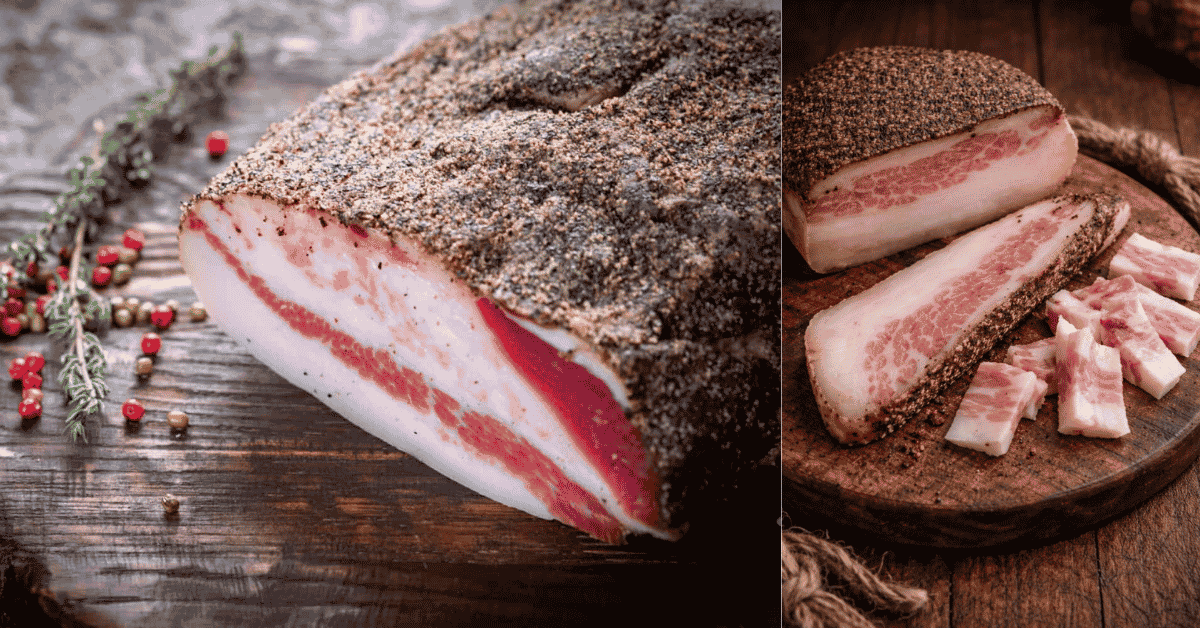
I’ll be honest. The first time I made guanciale I was convinced I’d poison somebody. A slab of raw pork cheek hanging in my basement for a month? Felt insane. It wasn’t. It was easy, weirdly relaxing, and the result was so much better than anything I’d bought that I never went back.
So if you’ve had a proper carbonara, gone looking for the secret, and landed on the word guanciale welcome. Let me save you the trial and error.
So What Is Guanciale, Really?
People ask me what is guanciale like it’s some exotic technique. It’s not. It’s pork jowl the cheek rubbed with salt and spice, then left alone to cure and dry. No smoke. No cooking. Just patience.
The fat is everything here. Jowl fat is different from belly fat. Silkier. It melts cleaner. Drop a few cubes in a hot pan and it turns to liquid gold that clings to pasta in a way bacon just can’t pull off. Romans have built entire dishes around that fat, and once you taste it rendered down, you get why.
A little goes a long way too. One homemade piece will outlast your enthusiasm for cooking it.
Guanciale vs Pancetta: They’re Not the Same Thing
This one trips everybody up, so let’s settle it. The whole guanciale vs pancetta debate comes down to one question: which part of the pig?
Pancetta is belly. Same cut as bacon, just cured instead of smoked. Guanciale is the jowl, and that jowl carries way more fat denser, more gelatinous, more flavor. The result is richer. A little gamey, a little peppery, harder to describe until you’ve had it.
Can you swap them? Sure, when you’re stuck. But pancetta gives you a nice plate of pasta. Guanciale gives you the one people remember. That’s not me being a snob. It’s just true.
Tracking Down Pork Jowl
Before you cure anything you need the raw cut, and this is the part that stops most beginners cold.
Plenty of folks just type guanciale near me and call it a day and look, that’s a smart move to keep in your pocket. A couple of the Italian delis around [Your City] sell it already cured for the nights you don’t feel like waiting a month. Worth knowing where they are.
But making your own? You want raw, skin-on pork jowl. Here’s where I find it:
- An actual butcher. Best option by a mile. Half the time it’s not in the case but they’ve got it in back. Just ask.
- Latino and Asian markets. Pork cheek shows up all over these cuisines, usually cheap.
- Farmers markets. Anyone selling whole hogs has jowls. They’re often thrilled someone wants them.
Get a piece around one to two pounds, skin on if you can. It should be firm, pink, fresh. If it smells funky at the counter, don’t argue with your nose. Leave it.
What You’ll Actually Need
Short list. But two items aren’t negotiable.
- Raw pork jowl, 1 to 2 pounds
- Kosher or sea salt roughly 3% of the meat’s weight
- Curing salt #2 (you’ll see it sold as Prague Powder #2). This is the one with the nitrites. It’s what keeps the bad bacteria out during the long cool cure.
- Coarse black pepper. More than you think.
- Whatever aromatics you love crushed garlic, thyme, bay, juniper, a pinch of chili
- A kitchen scale
- A zip-top or vacuum bag, plus some twine for hanging
About that curing salt. Don’t skip it. I know some old recipes use plain salt and nothing else, and I know it feels like overkill. But slow-cured meat sitting at fridge temperatures is exactly where botulism likes to set up shop, and the nitrite cure shuts that down. It costs almost nothing. Use it.
The Step-by-Step
1. Weigh first, everything else second
Put the jowl on the scale. Write the number down. Everything you do is a percentage of that number, so guessing here ruins the whole batch. Measure 3% of the weight in salt. Add the curing salt #2 in the exact amount the package lists for your meat’s weight follow the label, it’s precise for a reason. Crack in a heap of pepper and your aromatics.
2. Rub it everywhere
Coat the whole thing. Get into every fold and crease. Bare patches are where things go wrong, so be a little obsessive about it. Then bag it up with all the cure that fell off and press the air out.
3. Let it cure in the fridge
Lay it flat on a tray. Flip it once a day liquid pulls out of the meat and you want it moving around. Give it one to two weeks, figure about a week per inch of thickness. You’ll know it’s ready when it feels firm clear through, no squishy center.
4. Rinse, dry, pepper
Rinse the cure off under cold water. Pat it bone dry. Now hit the outside with a thick coat of cracked pepper if you want that classic peppery crust I always do.
5. Hang it up
Loop some twine through one end and hang it somewhere cool, dark, and a little humid. Around 50 to 60 degrees is the target. A spare fridge works. So does a cool basement or a wine cooler. Then walk away for two to four weeks.
6. Know when it’s done
The trick is weight. When it’s lost about 30% from where it started after the cure, you’re there. It should feel dense and firm with no soft spots. Slice in deep pink meat, creamy white fat. Wrap it well and it’ll hold in the fridge a couple of months. If it lasts that long.
Now Go Cook With It
Here’s the fun part. Pretty much every guanciale recipe starts the same way: cube or strip it, drop it in a cold dry pan, and let it render slow until the fat goes clear and the edges crisp. That rendered fat is the flavor base for everything after.
The two dishes that made it famous
Ask anyone about guanciale pasta and you’ll hear the same two answers. Carbonara guanciale, its fat, eggs, pecorino, black pepper. No cream. I don’t care what that one recipe site told you. Then amatriciana, which goes the tomato route with a little chili. Both are fast once your guanciale’s already hanging there waiting.
And don’t stop at pasta. Crisp some over roasted vegetables. Fold it into eggs. Sneak it into a sandwich. It quietly fixes almost anything.
Mistakes I Made So You Don’t Have To
I eyeballed the salt once instead of weighing it. Inedible. Too salty to save. Lesson learned.
I also pulled a batch early because I got impatient, and the middle was soft and the flavor was nowhere. It needs the full hang. And one time I packed it too tight against a fridge wall with no airflow moisture got trapped on the surface and I had to toss it. Give it room. Keep it cool. Let time carry the weight.
Make one batch and it all clicks. Then you’ll be the friend who shows up with homemade guanciale, and trust me, that’s a good thing to be.
Frequently Asked Questions
Is homemade guanciale safe to eat without cooking?
Once it’s cured and aged down to roughly 30% weight loss with curing salt #2, it’s stable and safe but most people still cook it into a dish rather than eating it straight.
How long does this take start to finish?
Three to six weeks. One to two curing, two to four hanging. There’s no real shortcut.
Can I just use pancetta instead?
In a pinch, yes. But guanciale is fattier and bolder, so carbonara and amatriciana won’t taste the same. For those two, hold out for the real thing.
Is the curing salt actually necessary?
Yes. It blocks dangerous bacteria during the slow cure. Regular salt on its own isn’t a safe stand-in for curing whole muscle.
What if I’d rather just buy it?
Totally fair. Italian delis and good butchers carry it a quick “guanciale near me” search usually points you to the closest one.
